 foundry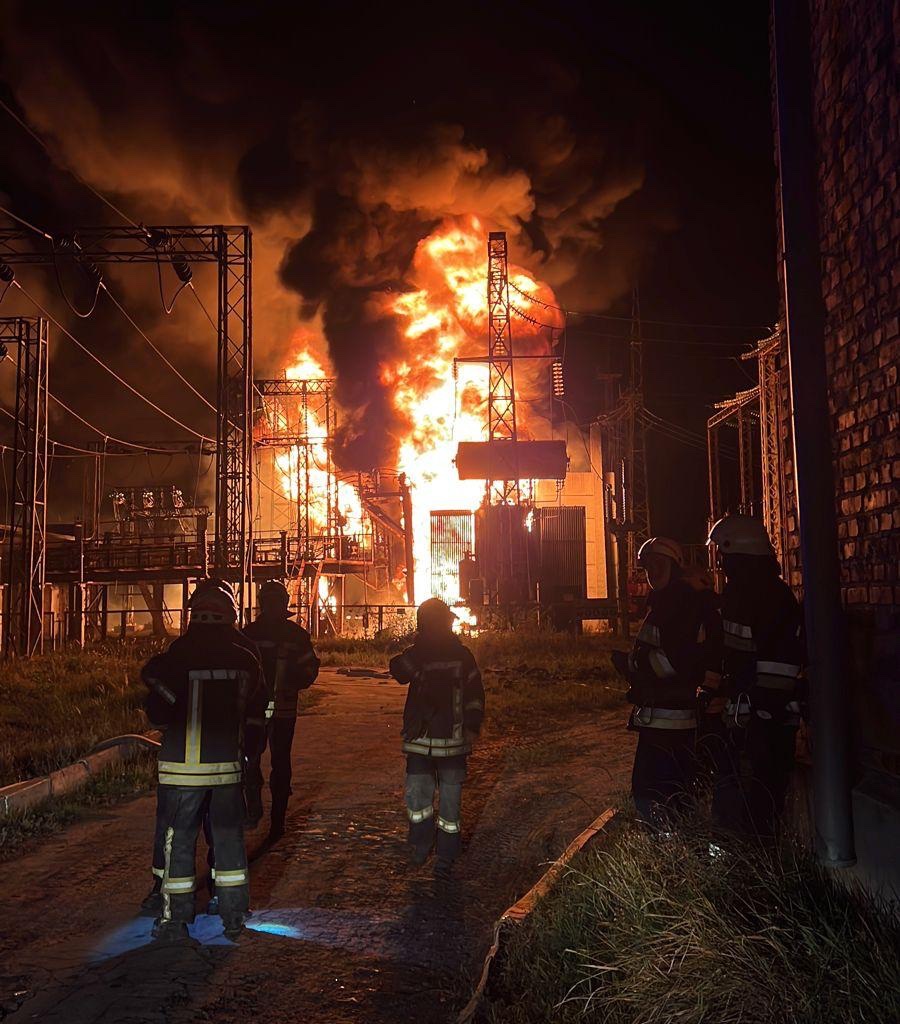
KYIV — The hum of generators has replaced the sound of city traffic in parts of the Ukrainian capital, three days after Russian forces struck at least six energy facilities across the country in open defiance of the "energy ceasefire" brokered by U.S. President Donald Trump.
The strikes, confirmed by Ukrainian President Volodymyr Zelenskyy's office and verified by independent monitors, landed as recently as October 13 — a full 48 hours after the truce was supposed to halt attacks on power stations, substations, and heating plants. Kharkiv's central substation took two cruise missiles at 03:40 local time. Repair crews in donkey jackets and hard hats are still pulling copper wreckage from the crater.
"Russia has hit at least six energy facilities," Zelenskyy said in a video address delivered from a darkened government building, emergency lights casting his face in flat amber. "They agreed to this ceasefire in Washington. They signed the understanding. And then they sent drones into our transformers." He paused, leaned closer to the camera. "If Russia continues, Ukraine will strike back. We have the right."
The math of the damage is simple and brutal: six facilities knocked offline means roughly 1.2 million civilians without reliable electricity heading into late October. Water pumping stations in Kharkiv run on the same grid, meaning taps run dry within four hours of a blackout. Heating plants serve apartment blocks where pensioners live on the fifth floor and higher, and the overnight lows this week have been sitting at 2 degrees Celsius.
On The Ground
In Kyiv's Osokorky district, a neighborhood of concrete slab towers on the Dnipro's left bank, the October 12 strike on the nearby ChTPP-6 combined heat and power plant is still visible — a column of smoke that rose for six hours, and the smell of burning transformer oil that clung to curtains and coat fabric for two days afterward. Residents describe the sound of the Shahed drones in the hour before impact: a two-stroke moped engine, low and persistent, flying in circles overhead.
Olena Voronova, 67, carried two five-liter jugs up four flights of stairs Tuesday afternoon, her breath audible on each landing. She filled them at a public well that a church congregation restored in 2023, after the first winter of grid attacks.
"Third winter of this," Voronova said, setting the jugs down at her door. "I've stopped counting the ceasefires." She thought: My knees can't keep doing stairs. Sasha in 4B hasn't left her flat since the sirens — someone needs to check on her. Bread. I forgot bread again.
At the ChTPP-6 site, shift supervisor Dmytro Kovalenko, 41, waved off a question about the ceasefire with a greasy hand. His crew of eleven has been working 19-hour shifts, stringing temporary line to reroute power around the destroyed transformer bay.
"The Kremlin says what it says," Kovalenko said. "I reconnect what I can reconnect. That's my politics." He spat into the gravel, then turned back toward a crane lifting a replacement insulator. He thought: Tanya's gonna be asleep when I get home again. Sixth night. At least the ceasefire talk means the Americans are still shipping parts — small mercy.
The Diplomatic Fracture
The White House has not publicly commented on whether the strikes constitute a formal breach of the agreement. A State Department official, speaking on condition of anonymity, confirmed that satellite imagery reviewed by U.S. intelligence shows impact damage consistent with Kh-101 cruise missile strikes at three of the six sites.
The timing of the truce's collapse has put Washington in an uncomfortable position. Trump announced the energy ceasefire as a significant de-escalation milestone, and Russian state media amplified the announcement within hours of its declaration. Yet by October 12, air-raid alerts were sounding across seven oblasts, and by October 13, Lviv's western grid operator had reported damage to a 330 kV substation that feeds three hospitals.
Ukraine's defense ministry has signaled that its response may not wait for Western approval. A military source with knowledge of planning said Ukrainian long-range drone units have received updated target packets for Russian energy infrastructure — the first such assignments since the ceasefire took effect.
Zelenskyy's warning was direct: "If Russia violates, we respond. Period. Ukraine will not freeze quietly while Moscow lights its cities."
Winter Arithmetic
The strategic logic behind energy strikes has not changed since 2022: attack the grid in October, let the cold do the rest. Overnight temperatures drop below freezing by the first week of November. Grid operators say that without the six damaged facilities, Ukraine enters winter with roughly 15 percent less generating capacity than planners had budgeted.
Repair crews from Ukrenergo have already restored partial power to Kharkiv and are attempting to bridge Lviv's damaged substation with mobile transformer units, a process that takes roughly 72 hours per unit under combat conditions. Emergency power imports from Poland and Romania are covering part of the gap.
In Osokorky, residents have organized a building-by-building schedule for the single functioning generator, shared between two towers. Someone taped the rotation chart to the lobby door with electrical tape, next to a child's drawing of a sun.
The drones came again last night. Nobody in Kyiv expects the ceasefire to survive the week.
Kovalenko's crew finished stringing the temporary line at 04:12, threw the switch, and watched Osokorky's windows flicker back on floor by floor, while a crane operator swung the next insulator into place.