 foundry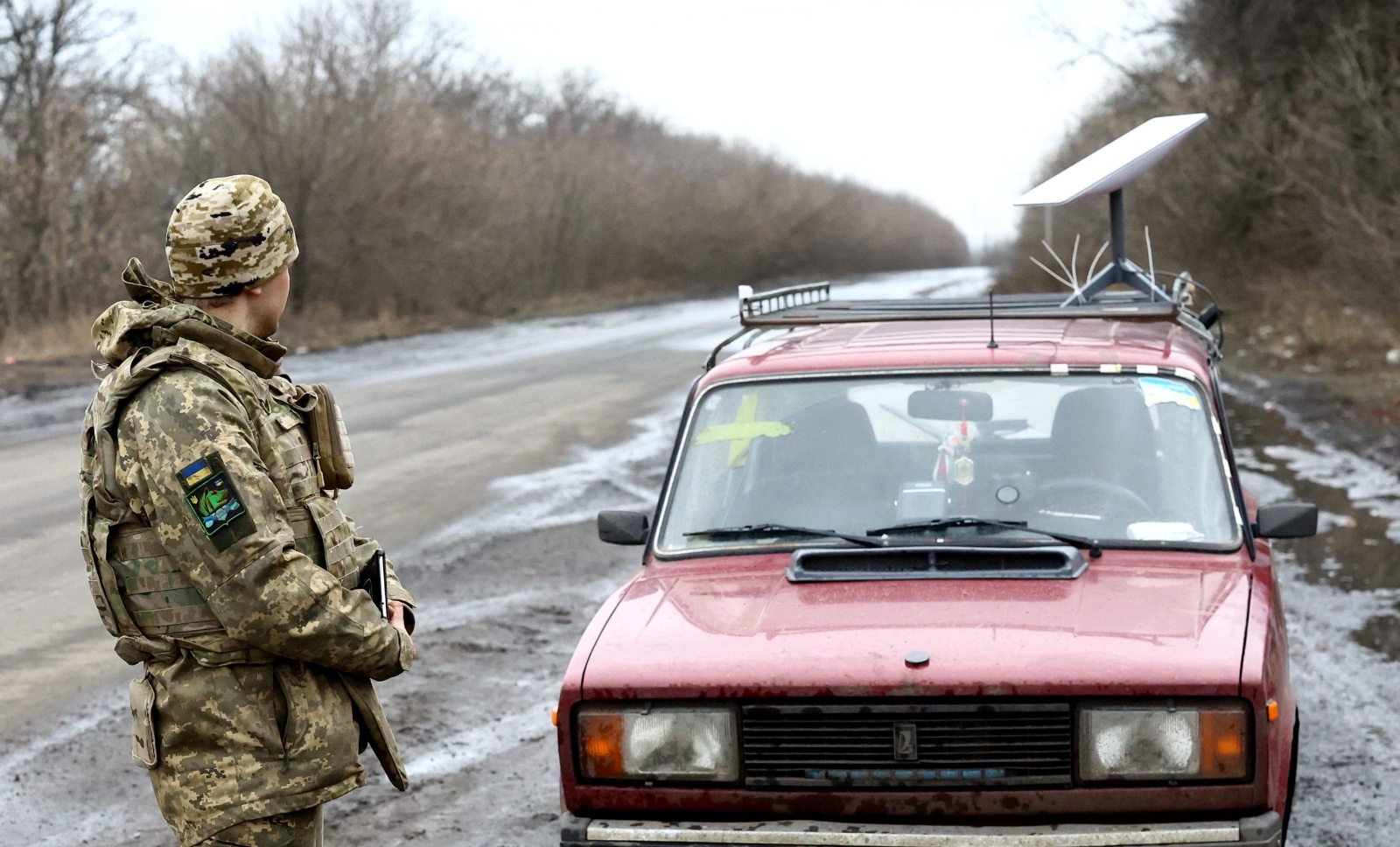
The thing arrived at 0300 Kyiv time like most bad news does in this war — silently, as a line item on a maintenance log. A drone reconnaissance team attached to Ukraine's 4th Assault Brigade near Kupiansk ran a routine diagnostic, found geofencing they hadn't authorized. By sunrise the chatter across encrypted channels was already frantic, one artillery spotter in a Telegram group writing "we are aiming with our eyes again."
The restrictions, confirmed by three separate brigade-level sources and a Ukrainian defense ministry official speaking on condition of anonymity, fall into two distinct categories — and neither is subtle. Near the front line, access to satellite internet through Starlink terminals has been sharply curtailed. And in Russian-occupied territory, terminals refuse to connect at all, a policy SpaceX describes as preventing hostile use but which Kyiv officials characterize as something closer to a leash with an embedded location chip. Ukrainian drone operators near the front line say the fix functions as a tripwire for Moscow's own strike planners.
"Starlink was our nervous system," a drone unit commander who uses the callsign "Kabanchyk" said by phone from the Kharkiv oblast, his voice fraying at the edges like the connection itself. "Now we operate like a man who had his peripheral vision removed. We still see what's directly ahead. We miss everything that was coming from the sides." He described a failed FPV strike on a Russian ammunition depot two nights earlier — coordinates confirmed, route plotted, then no transmission window. The depot remains intact. A year ago I would have laughed at this. Now I write it in a logbook nobody senior will read.
The operational math is ugly. Ukrainian naval drone strikes on the Black Sea Fleet, which forced Russia to essentially abandon Sevastopol as a naval base in 2023, depended on continuous Starlink uplinks mid-mission. Those strikes have slowed. Medevac coordination for wounded troops near zero-line positions now routes through patchwork cellular networks that Russian electronic warfare units jam with increasing ease. A field medic with the 68th Jaeger Brigade, reached via a flaky satellite phone connection that dropped twice in nine minutes, put it plainly: "Before, I knew where every wounded man was within thirty seconds. Now I pray and drive."
SpaceX did not respond to repeated requests for comment. The company's public statements have previously framed such restrictions as terms-of-service enforcement, noting that Starlink was never intended for offensive weapons applications. That distinction — terminal as communication tool versus terminal as drone guidance node — has never held up well against the physical reality of this battlefield, where a dish on a hillock and a dish strapped to a kamikaze sea drone differ mainly in altitude.
In Washington, the recriminations landed before the facts did. Senator Jeanne Shaheen, the top Democrat on the Foreign Relations subcommittee handling the region, called the restrictions "an unacceptable private veto over allied military operations," while her Republican counterpart Senator Ron Johnson — a longtime Musk ally — told a Wisconsin radio station that "Ukraine has been riding a billionaire's generosity for years and is now surprised there are strings." Every time I say something supportive of Musk I get forty calls from defense contractors and two from constituents. I know exactly which ones fund the next campaign. The Pentagon, for its part, has been notably quiet, though a senior defense official, granted anonymity to discuss internal deliberations, confirmed that the department is exploring alternatives including a commercial consortium built around Amazon's Project Kuiper and the EU's IRIS² constellation — neither of which will field operational capacity before 2027 at the earliest.
The gap between now and 2027 is measured in lives, and the Ukrainians are doing that arithmetic in real time. Volodymyr, a 39-year-old FPV pilot with a background in HVAC repair, spoke from a basement workshop outside Pokrovsk where the walls were lined with foam-lined crates of drones that smell of solder flux and cheap energy drink. "People think war is about weapons," he said, gesturing at a workbench cluttered with thermal cameras and a hand-labeled jar of spare motors. "War is about connection. Who talks faster, who sees first. When they cut our connection, they cut our eyes. The Russians did not cut it. An American company did." He paused, then returned to soldering a flight controller, the iron's tip ticking softly against the circuit board.